

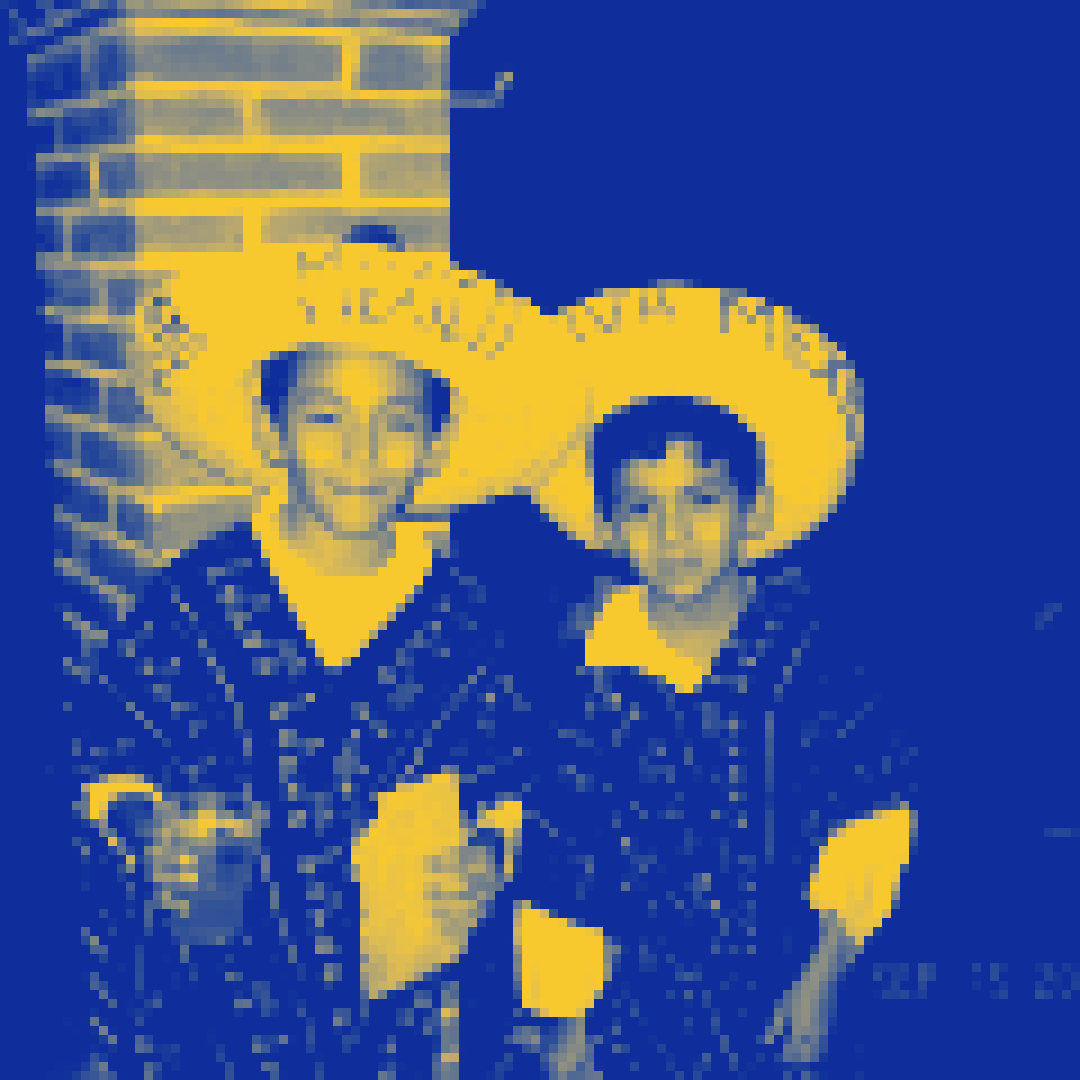
Aquí y Allá
I hereby declare that I denounce myself and become something
Aquí y Allá
“You don’t seem excited,” my dad told me in a Spanish far more advanced than mine. I let out a frustrated chuckle, and I tried to remember the last time I laughed in my native language.
Since moving away, we still spoke in our native tongue. I tag myself with empty words that I pretend to understand, like Hispanic, or latino, despite my growing difficulty to maintain grammatical perfection; despite the growing need to replace words with their English counterparts like weeds appearing in a garden; despite my anger bubbling and fizzing in fucks and shits; despite my favorite poems and songs written accentless; despite me “being one of the good ones;” despite my strange food during lunch; despite my dreams taking place in the land of the free, where my value is monetary wealth and riches; despite it all and despite myself.
And yet the spite never goes away.
The question sat in the air of the car for a minute, floating around and almost freezing from the cold of a Chicago winter. The skyline of a city that used to be as tangible as Atlantis drifted further behind the car.
I thought about the guava tree outside of our old church in Guadalajara, about how all the kids used to climb it to the top while the adults congregated. I remember reaching a branch I had never touched before, standing so high that my worrying brother looked as small as the caterpillars hiding in the leaves. I looked for my grandma’s house, with her beautiful garden and sturdy metal fences; then for our own, with the spiraling staircase and colorful tiles, not much further away. I felt like I could see past them, through the pollution and clouds, past the city, past the cerros and colimas, past borders, past the future.
“I don’t know,” I responded. I must have imagined it, dreamed it up in English.
We all sat around waiting for the judge to arrive, tightly lined up in chairs in a massive courtroom. The people around me all seemed so much older, wiser, and more tired, as if they had reached the end of a turbulous pilgrimage. Some had their heads down, others fidgeted with the orange folder they had handed out, “signed” by a president who did not want us here.
I tapped my pen against it rhythmically, thinking about a tune or song that I could not name. I wondered if my life would always be nothing more than paperwork and waiting rooms to prove that I exist, that I belong, and to convince others and myself that I am something. American, Mexican, immigrant, legal, migrant, illegal, Hispanic, white, bilingual, different, latino, weird, normal… I had become tired of the tags, and of waiting around for officers, or judges, or presidents, or whatever to determine that for me.
This felt no different than when we would travel every year back to Mexico, to the consulate to renew our visas. It meant another three years away from home, back at home. At least it helped me remember that I could still dream in Spanish.
The man next to me seemed frustrated with the pen tapping that I had unconsciously continued, and others in front of me turned around and offered me a polite smile. I could not tell if they were hinting at me to stop, or if they were providing a consoling gesture for my nerves.
I wanted to yell at them, to proclaim that I was not nervous, to explain to them how this all meant nothing, how mistaken they are, how little I care, just how little I care, how I am Mexican and not American or Mexican-American with or without a hyphen, how I was nothing and felt like nothing, how I spoke Spanish and had brown skin, and how stupid they all were for doing this process and renouncing who they were. How stupid they all were, that’s what I wanted to tell them. I could not fathom why they were sitting here with me.
I noticed a woman crying near the corner of the room, like the people at the consulate who had their visas denied.
I kept tapping my pen.
“This is something to celebrate,” my dad replied after another long pause.
Everyone always seemed to tell me how to feel, what to do, and who I am; for some reason, people always felt like they understood more than me.
People reacted so strangely when I told them about my citizenship status, even those close to me. They stared at me peculiarly, a type of stare that felt like a childhood imaginary friend. The stare that the kids at school gave me when I wore a winter coat in August. The stare that adults at restaurants gave my family when we spoke a little too loud in Spanish. The stare that school principals gave my parents when they said they did not need a translator.
Some told me words like congratulations in a trembly voice, some more sarcastic than others. I could not tell who meant it and who didn’t. Americans seem to think louder than they speak; I always know what they are thinking, and they never say what they mean.
One of my professors said congratulations, doubted themself, then asked, “This is something to celebrate… right?” I shrugged.
Some could not believe that I was doing it, and explained to me how bad of an idea it was (You want to become a citizen, right now?). Americans always seem to offer their opinion, even when you do not ask for it. They joked about how they wanted to renounce their own citizenship, how I could take theirs instead, and laughed at the concept as if I was not right in front of them. As if I had any choice in any of this. “I wish I could get my European citizenship, you should do that instead!”
They have no idea what that even means. They have never been in a consulate before, praying for a nice person to be behind the teller window; they have never been interrogated and belittled by an agent who had a bad day, while they scan your entire life in the form of documents and certificates; they have never had medical exams and bloodwork done to make sure you are not riddled with diseases from the “third world;” they have never been in a different line at the airport, carrying more than just a passport; they have never been tested to determine if they have a right to be in the country or not; they have never left Christmas at grandma’s house forever.
I laugh with them, and tell them that I wish I could be Spanish instead. It burns, like the hairy caterpillars in the guava tree.
Most had no idea that I was different at all.
The workers at the courtroom handed us another document to fill out: our voter registration. I helped a woman behind me to translate some of the parts she did not understand, while the man next to me used ChatGPT to translate the word county into Mandarin.
I thought about when I got stuck on my geometry homework in middle school, and had to translate the question into Spanish first so that my mom could help me solve it. Sometimes we just had to wait for my dad. I never saw them complain once, even when I sobbed.
As the years pass, it becomes increasingly more difficult to remember a time when I could not understand the essay I write now.
I find myself staring at the mirror extensively, just so that forgotten boy, far away from home, can catch glimpses of who he is now.
Back then, English class had converted into an all day struggle, and the language had become an unwanted companion in my life. I had to do math with him, write essays with his help, and use him to make friends. I would come home from school with a throbbing headache some days, too young to be having migraines, exhausted from the mental labor. On days like that, I turned on the TV and watched only the silly cartoon characters without bothering to read the subtitles. I couldn’t care less what they had to say.
Early into having moved to the United States, when I was still in fourth grade, I felt this throbbing ache before I could make it home; It began bothering me as early as the pledge of allegiance. I still muttered through most of it, since no one ever taught me and I could still not pick up all of the words. Even still, it was uncanny to me. I felt like a part of a cult. I still don’t understand why we had to do that before class every day.
Memories from that time feel like a scratched DVD, but I believe the teacher asked us about our favorite animals. By the time it was my turn, the head fog and numbness had consumed me, and the only word that came to mind was unicorn. Everyone laughed, and I went along with it. The rest of the day, the word unicorn appeared repeatedly. The other kids would turn and rapid fire a sentence at me, and I would take an extra second to catch up. But unicorn required no translation. It rang out in the sentence like a bell. They had no ill intent, they had found a silly link to connect with the new student.
They kept coming up to me, speaking gibberish at a native speaker rate. All I could understand was unicorn, and it reverberated inside my head. There were no subtitles.
I broke down crying. The teacher thought that the other kids were making fun of me, so she called my parents to tell them about the unicorn fiasco. I could not explain to her why I cried. I thought about the way my grandmother scratched my hand when I cried. I missed school without a pledge of allegiance.
The judge had finally arrived.
I turned to see more people in the courtroom holding back tears. I chuckled at the thought of them crying about purple unicorns.
We were almost back to our United States house in our United States neighborhood, which now was my regular house in my regular neighborhood. Nothing had changed, despite the lengthy oaths, the paperwork, and pictures with the stripes and stars.
“Now I have to go to the credit union, whatever that is…” The questions had finally riled me up, and I pretended to be shaking from the Midwestern cold. “...and I have to get a passport, an American passport, it’s all just more offices and waiting rooms and…”
I have this recurring dream of being in my uncle’s car, the one with manual cranks for the window and with broken A/C, driving through the Mexican countryside. We pass through valleys and climb steep mountains of reddish clay on an empty, asphalt highway. The sun, despite creating visible steam on the black road, feels like a hug from an old friend, one that is unrecognizable from your last time seeing them. My entire extended family somehow fits in the car, elbow to elbow, crammed into the backseat in a stereotypical fashion. Everyone tells stories about their lives and laughs with each other, and my smile feels foreign.
The scenery morphs into more familiar forms: eight-lane freeways, massive bridges, shopping centers, and soulless skyscrapers. It oscillates between two worlds, between past and present, as we traverse through my memories. I worry that I died, but I remember that we are going to the beach. I fall asleep on my grandmother’s shoulder, and my mother plays with my hair.
In that dream, I miss nothing and wish for nothing. I fall asleep without hollow dreams.
My dad told us that going to the United States would be like a big vacation.
We were only supposed to be there for three years.
Then returning home became a vacation.
And leaving home was one too.
And my life became a vacation that never ended.